
Every word is a brand opportunity.
Tone of voice
From winning new customers to inspiring your teams, we’ll help you harness the power of brand tone of voice.
True & Good is the UK’s longest-established brand tone of voice agency. Unlike most of our rivals, we didn’t start life as a copywriting company: we were a tone of voice agency from day one.
And although we’ve been focused on brand voice since 2011, it’s still a slightly niche – and somewhat misunderstood – area. People often ask us what tone of voice is, and why it matters so much. If you’re wondering too, please read on.
What is tone of voice? And why does it matter?
In a world where brands compete not just on product and price, but on personality too, your brand's tone of voice has never been more important. It’s not just about what you say – it's how you say it that shapes how people perceive you, engage with you, and ultimately, trust you.
If you're running a business or brand, understanding and managing your brand’s voice is crucial. And that’s where True & Good can help.
Defining brand tone of voice
Tone of voice is the distinct personality and style of communication a business uses across all channels and touchpoints. It includes word choice, sentence structure, rhythm, humour, formality, and emotional tone.
Whether your brand is fun, luxurious, authoritative, warm, rebellious, minimalist or aspirational, your tone of voice should help brings its personality to life. Brand voice should inform every piece of communication – from your web copy to social media posts, sales decks, customer emails, and more.
Tone of voice isn’t just the voice of the brand team. Ideally, it should guide how your entire organisation uses words, inside and out. It should reflect your brand’s values, resonate with your audiences, and motivate your people. And in some cases, it should be recognisable from its language alone.
For instance, brands like Oatly and Innocent Drinks opt for cheeky, playful verbal styles. (Innocent became famous on the back of this: Oatly have run with it further.) So whether on-pack or BlueSky, they write with this style in mind, flexing the tone if necessary in line with their message.

Self deprecating humour from Oatly, in a style Innocent pioneered.
Why tone of voice is so important today
In sectors where products or services are commoditised – like finance, telecoms, or FMCG – tone of voice can set you apart. When every bank has the same products, with interest rates at parity and increasingly, no physical branch – or competing B2B ‘software as a service’ platforms seem to make the same claims – brand personality can be the differentiating asset that cuts through.
For example, take Virgin Atlantic. Their success breaking in to an established industry didn’t just come from innovation: it came from how they communicated. They were a ‘David’ in a world of ‘Goliaths’ – and with a cheekily provocative style, stemming naturally from their founder, Richard Branson. Over decades, it’s helped to build trust and loyalty, while making their competitors seem stale.

Virgin Atlantic attack British Airways in a cheeky, provocative voice.
Brand voice builds emotional links
People don't just buy products – they buy into stories, communities and identities. A consistent tone of voice builds an emotional connection with audiences by showing authenticity, reliability and shared values.
This is especially vital in today’s landscape where consumers, particularly Gen Z and Gen Alpha, expect transparency and relatability from the brands they support. A well-crafted brand tone of voice helps you speak their language, both figuratively and literally.
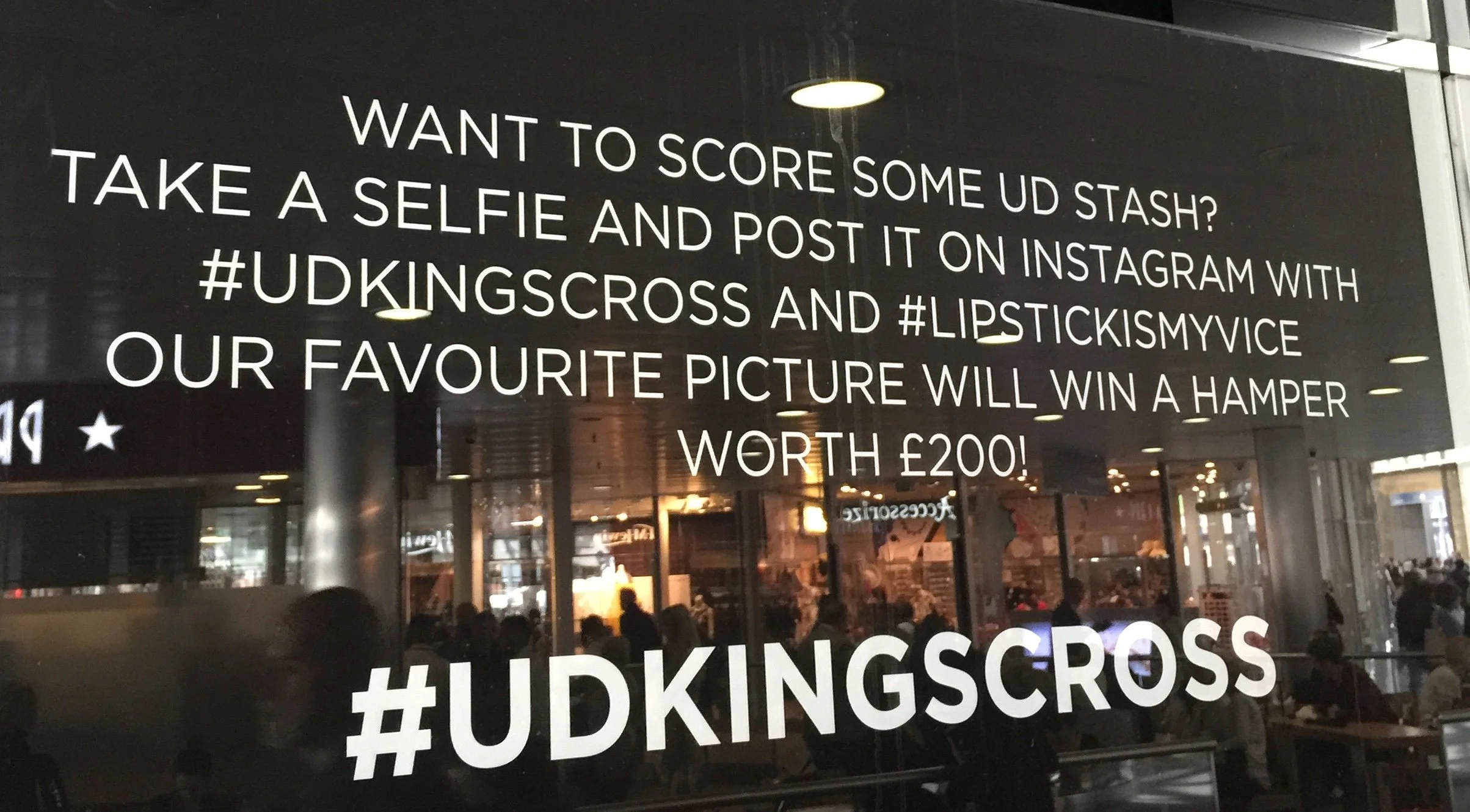
Beauty brand Urban Decay mirrors its Gen Z and Gen Alpha audience’s tone.
Improving brand recognition and recall
With podcasts on the rise and smart speakers like Amazon’s Alexa in more and more homes, a recognisable tone of voice can help people identify your brand before they even hear its name.
Our Founder and Head of Words, Mark Schulz, was the first Brand Experience Manager at the mobile phone business, O2. As well as launching the brand’s tone of voice back in 2007 – and introducing brand voice as a concept to O2’s parent company, Telefónica – he was in charge of day-to-day brand guardianship. Sean Bean was the human voice of O2: he had recorded every advertising voiceover from the beginning. So when it came to creating tone of voice guidelines, one principle Mark introduced was making sure the team always asked: What would Sean say?
By doing this, not only was the brand recognisable on TV and radio from the sound of Sean’s voice. The whole business also understood that when it came to writing, they should always try to use words that would feel natural if they had to be spoken by Sean Bean. In what could sometimes be a jargon-heavy sector, this discipline helped O2 remain simple and warm.

Fresh, positive, simple. The brand tone of voice at O2.
If someone can read an email and recognise your brand before they see the logo or sign-off, that’s a win. Tone of voice becomes part of your brand’s distinctive sensory toolkit – like colours, jingles or fonts.
A brand voice to unite the whole business
From a leadership perspective, having a clearly defined brand tone of voice helps teams (and agencies) write with consistency. It saves time, reducing back-and-forth debates over copy. So it speeds up approvals, and can mean your business moves faster to market.
This is great for fast-scaling companies or multinational organisations. Here at True & Good, when Camden Town Brewery was expanding internationally, we created tone of voice guidelines to help new teams across mainland Europe understand the distinctive brand voice, in order to apply it in their local language. And the global bank Standard Chartered came to True & Good when they needed help rewriting thousands of internal comms templates for their HR team. Without clear guidance, this kind of messaging risks becoming fragmented – and with it, so does your brand.
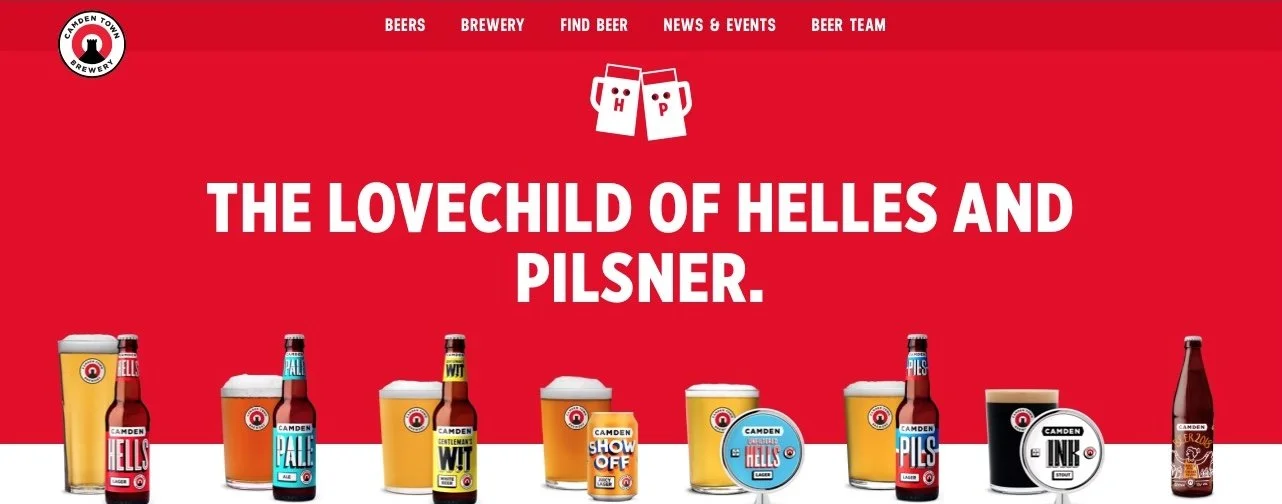
We defined the tone of voice of Camden Town Brewery.
The high cost of getting it wrong
Leaving your brand voice to chance – or paying attention to it in some channels (like above-the-line advertising), while ignoring it in others (such as customer care) can have consequences in the real world. These include:
sending mixed signals: your brand seems disjointed, unclear, or inauthentic
brand erosion: inconsistency weakens trust, and undermines identity
disengagement: boring or badly-tailored messaging is simply less likely to work
reputational risk: around sensitive topics, or in crisis communications, the wrong tone can make matters worse
Think of those high-profile cases where the way a business responded seemed to pour oil on the flames. People working for large organisations can often grow “tone deaf” to an overly corporate style. But for a customer, there’s a world of difference between the inhuman business-speak of “Any impact to end-users is regrettable”, and more natural phrasing such as, “We’re deeply sorry we let you down.” When British Airways fell victim to hackers, one mistake they made was describing it as a “very sophisticated” attack – when the major vulnerability at BA was a result of human error.
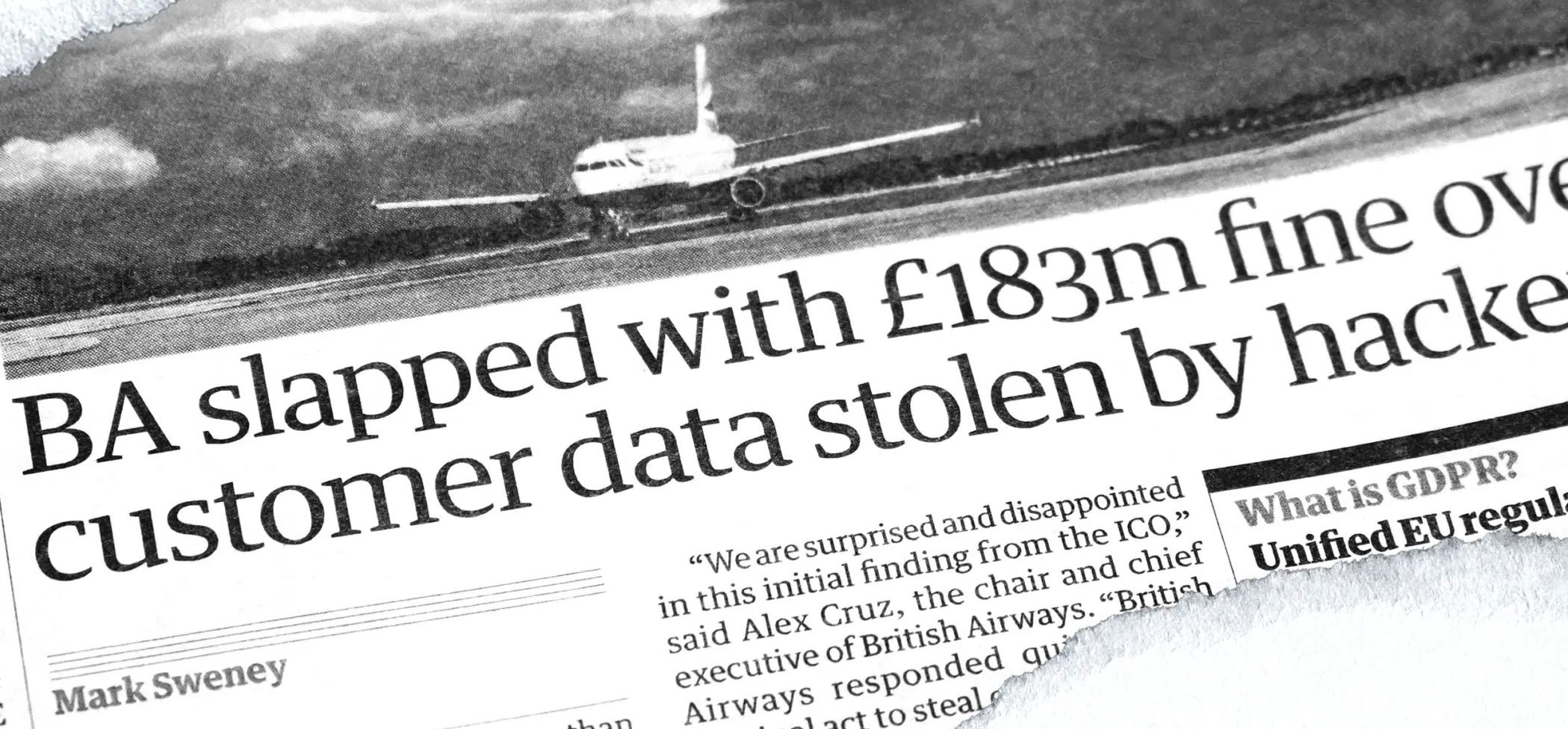
In crisis comms, tone of voice choices can have lasting impact.
Is ‘tone of voice’ the same as ‘messaging‘ or ‘content’?
No. These three aren’t the same.
Think of messaging or content as the ‘what’. Typically, this is factual information you want to get across.
Tone of voice is the ‘how’. It’s the style you use for the message or content.
And a content strategy describes the ‘where’, ‘when’ and ‘why’. So it’s not about tone of voice: it’s about defining the channels you’ll be using; the people you hope to reach; the message timing; and your objectives.
These things should all work in harmony. For example, if your tone of voice guide says you should always write in a “warm, helpful tone” – but your writing sometimes seems cold and officious, there’s a mismatch between the brand’s desired tone of voice and the messaging.
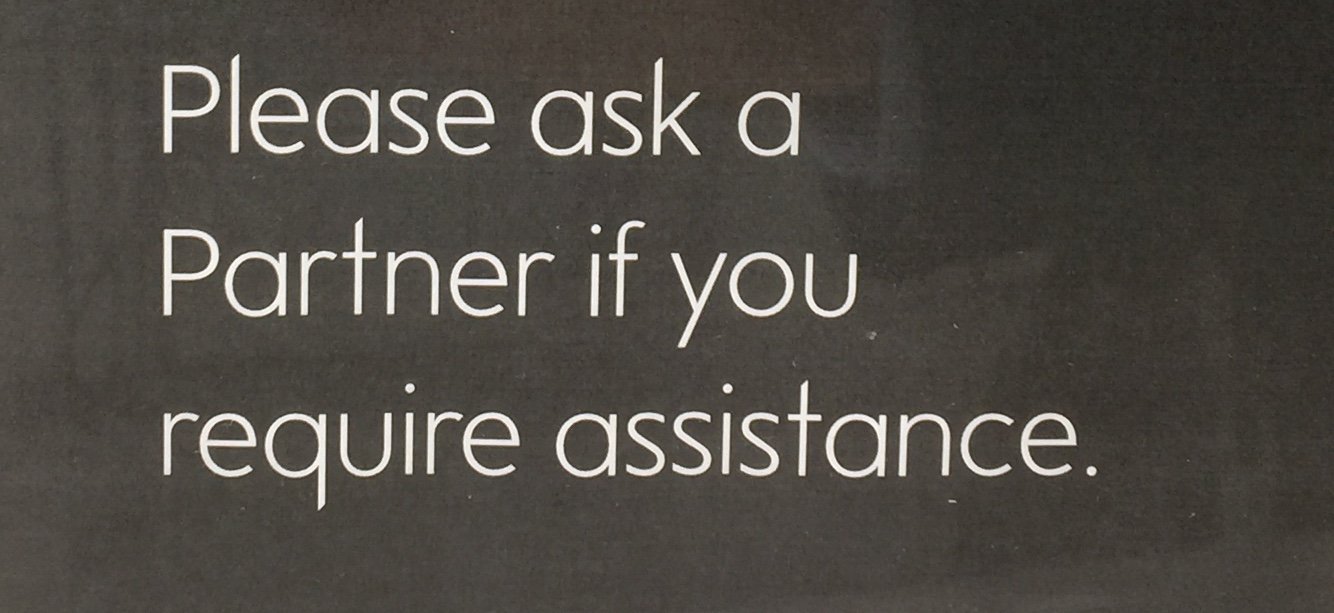
This brand wants to sound helpful, but is taking a too-formal tone.
The True & Good approach to brand tone of voice
Every single business is different, which is why at True & Good, we don’t follow a ‘one-size-fits-all’ voice-creation approach. But we often use a simple five-step process we call ‘A to E’. It’s flexible enough to work for anyone from micro-entity businesses like Pachacuti to global institutions like the British Council.
This works well for brands that are already established. If yours is a new brand, a lot of this still applies. But of course, in a stage like the audit, there may not be any existing materials (or current customers) to include.
A is for Audit
Step one is a brand language audit. Look at how words are used throughout your organisation. Gather as much material as possible, from as many departments and touchpoints as you can. The things that are easiest to see can often turn out to be the least telling: content like TV ads, posters and social feeds often receive more care and attention than ‘below the water-level’ communication such as job descriptions, internal communications, HR policies, customer complaint replies, and day-to-day messaging between teams.
One of the toughest aspects of running the audit is that people within an organisation can develop a kind of ‘snow blindness’ to the linguistic styles they’re immersed in all day. Leadership teams, in particular, often drift into using a kind of shared and generic ‘corporate-speak’ that risks diluting (or even polluting) a distinctive brand voice. This is one of the reasons it can be useful to bring in a brand language consultancy. (Yes, we know we’re likely to say this – but our clients repeatedly tell us it’s true.)
And depending on deadlines and budgets, the audit phase can include interviews with your colleagues and customers. When it comes to working out who best to talk to, don’t limit interviews to just the ‘C-Suite’. Very often, we see a mismatch between how management believe or hope their brand (or brands) are using language, and what’s actually happening down at grassroots. Make sure to hear from your customers – and your competitors’ customers – too. We have qualified market research professionals within our own team, and can explore views on brand voice in various ways, including through a technique known as protocol aided revision.
We’d also recommend looking at your closest competitors, to see how much tonal overlap there is between you and them, and what more you can do to differentiate positively against them. There’s also value in looking beyond your own sector. Challenger brands hoping to leapfrog market leaders – or leader brands, wanting to put clear water between themselves and their rivals – can learn by looking at brands in entirely unrelated fields. Our deep expertise means we are able to draw on examples gathered from all across the world.B is for Base
Once you understand how your brand is using words in the real world today – or how its competitors might be ‘speaking’ if your brand hasn’t launched yet – stage two is about basing the voice for the future on the right strategic foundations of your brand.
Depending on how you choose to define the brand itself internally, this work might draw on various kinds of brand strategy tool. Some businesses have clearly defined their ‘brand essence’; there may be ‘personality pillars’ or ‘brand values’ we need to align with or bring in.
However you brand is defined, the ‘base’ stage is about deliberately anchoring the verbal approach in the aspects of the brand framework (however formally or loosely defined it is) in a way that will fit.
Doing this will help you work out which aspects of the voice as it’s in use today should remain. Which areas are underrepresented, and might need to be bolstered or introduced. And which aspects should be altered, or jettisoned.C is for Create
With your brand’s current voice understood from the audit, and its direction set by aligning it with the brand, the third – and often, most intensive – phase is stage three, where we create the brand voice.
There are myriad ways to approach this. And understandably, in contrast with the highly analytical phases one and two, phase three relies equally on brand strategy and (in many cases) creativity.
The balance between the two depends on the context and problem. For a customer-facing retail bank, trying to get out of a bad habit of tending towards unfriendly and over-formal customer communications, the brand voice we need to create may be chiefly around clarity, simplicity and warmth. Such a voice may not be difficult (for us) to define or to demonstrate. The challenges involved around launching it may be more to do with ‘winning internal buy-in’, or the culture change needed in order to bring the guidelines to life.
But for a drinks brand, or a new cereal, you might be hoping for a uniquely distinctive brand voice that comes to life on pack or in social media. Here, the challenge may not be around gaining buy-in, but arriving at a style that’s both dissimilar from your competitors, while also being acceptable to a shared audience within a well-established sector. This is often easier said than done, and there can be a high degree of subjectivity in deciding if the brand voice is right.
Fortunately, with almost two decade’s experience in creating and launching brand voices, we understand how to navigate the issues and questions that most often arise when trying to define and reach agreement on a voice. Which is why that once this phase is over, you’ll have a clear sense of what the brand voice now it.D is for Define
Now the core of the voice is created, it’s important to define it in a way that can easily be understood and shared. This fourth part of the process is essentially writing the tone of voice guidelines. Taking the voice we created during stage three, and codifying it so that writers clearly understand how to follow it – and people briefing in copy, or required to approve it, can clearly understand the tone of voice too.
Again, depending on timings and budgets, the form this definition of the tone takes can vary. At it’s simplest, it might be just a single-page document, describing the voice; sharing some clear ‘Do’s and don’ts’; and giving a few examples of the brand voice in different contexts.
At it’s most complex, it could be an extremely detailed document, running to 100+ pages and containing dozens of ‘Before and After’ examples of how people wrote for the brand in the past, and how you’d like them to write going forward. These can demonstrate all your main channels, and show how the tone might need to flex (if it should) depending on channel, message and audience. And every example might also include short but precise narratives, explaining the thinking behind certain choices, all the way down to those at individual word (or punctuation mark) level.
We’re always happy to quote on a range of options. To tailor our approach to your budget and needs. And to let you know honestly, based on our experience, whether the approach you are asking for is likely to work for your long-term objectives.E is for Embed
There’s a phrase just about every business we’ve ever worked with has heard us say at some point: “Defining the tone of voice is the (relatively) easy part. The hard part is making it stick.”
What do we mean?
Managing a brand’s verbal identity is different from – and more challenging than – managing its visual codes. When a logo changes, or a typeface is updated, it’s relatively straighforward to update the website, redesign the packs, even refit high street branches (and so on), in order to bring the visual identity to life.
And while it might be straightforward enough to rewrite the company website, the main thing around using words is that everyone in an organisation needs to use them. Unlike a brand’s visual assets – which might be the preserve of the design team – its verbal assets can be reinforced or diluted as a direct result of anyone’s actions.
Far more so than dealing with visual identity, changes to verbal identity also represent culture change.
So it’s important you allow for the embedding stage from the outset. Think of the people you expect to write in, or to know the tone. How will you make sure they understand it, to the right level of detail?
Maybe you’ll run hands-on writing workshop for your in-house and agency writers. Perhaps there’ll be seminars for people who need to approve professional copy, but aren’t expected to write it. And perhaps everyone will be asked do do some online computer based training, so the whole organisation has a sense of the brand voice, and can tailor things like emails and Slack messages in a way that should reinforce rather than undermine it.
Those five steps – Audit, Base, Create, Define and Embed – are a blueprint for refreshing or launching a brand’s tone of voice. But it doesn’t stop there. There’s an additional sixth stage – F is for Feedback – which is about checking in on how the new tone is working. Making any ‘course correction’ if needed. And gathering qualitative and quantitative results in order to start to measure and demonstrate the brand voice’s added value.
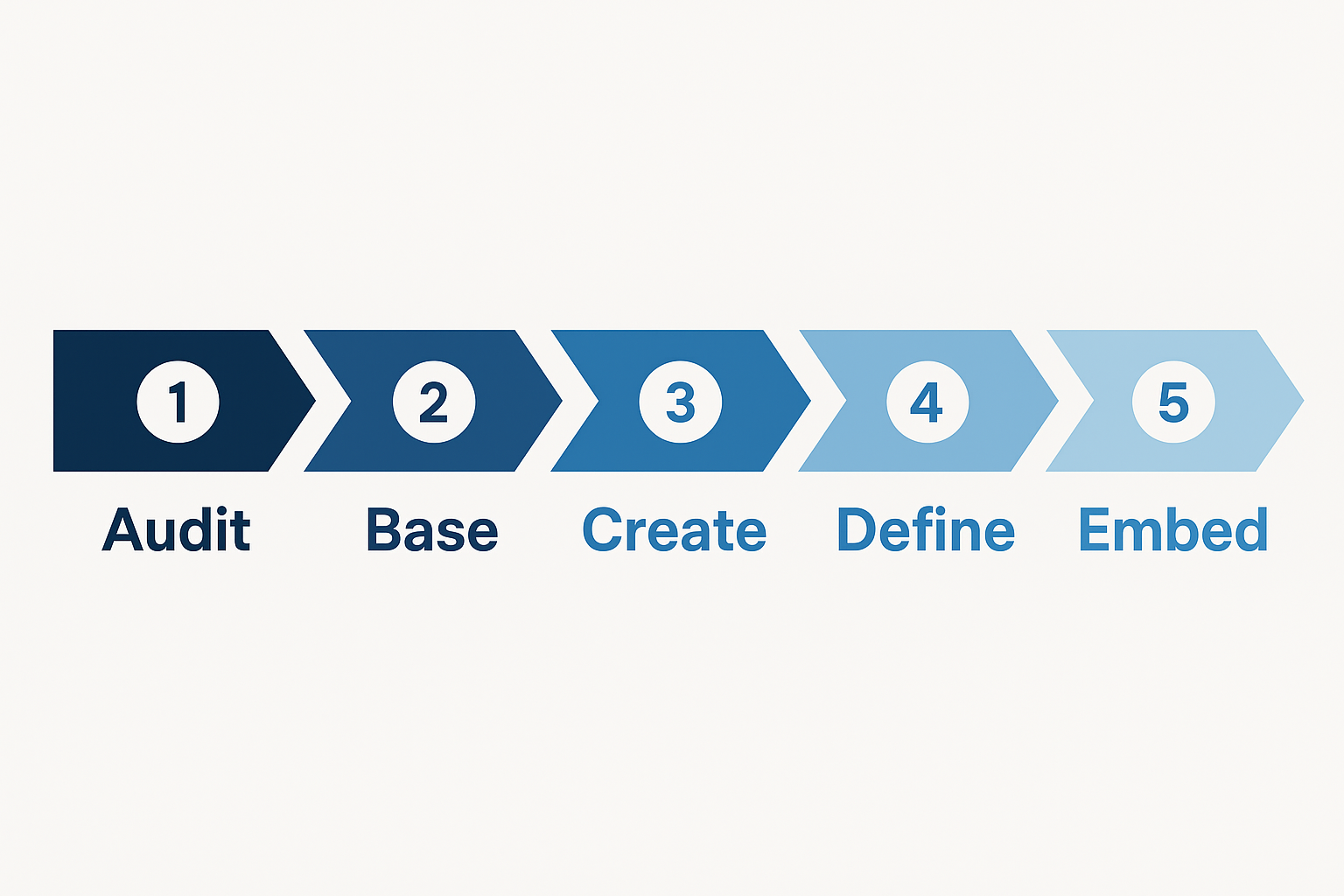
True & Good’s five-stage process for creating or refining – and then defining and launching – a brand voice.
“You can, through the words you use, give a distinct sense of difference to yourself and your company.”
— John Simmons, author of We, Me, Them & It
“Words are the most effective and accurate tools that exist in our universe.”
— Michael Wolff, co-founder of Wolff Olins
“We can’t speak highly enough of True & Good.”
— Allie Stanislas, Richemont
Get in touch
We’d love to hear from you, whatever stage you’re at in your brand language journey.
For a no-strings (and 100% confidential) chat about brand tone of voice, email the team or call our London HQ.
hello@trueandgood.com
(020) 7160 6280
+44 20 7160 6280
78 York Street
London, W1H 1DP